In Nigeria, accessing quality healthcare often depends more on systems than it does on skill. Hospitals are stretched, and patient records are frequently fragmented between digital and physical records. As a result, medical professionals are forced to make critical decisions under pressure, sometimes without the full picture. Across the country, these challenges are not new, but what is changing is who is stepping forward to solve them.
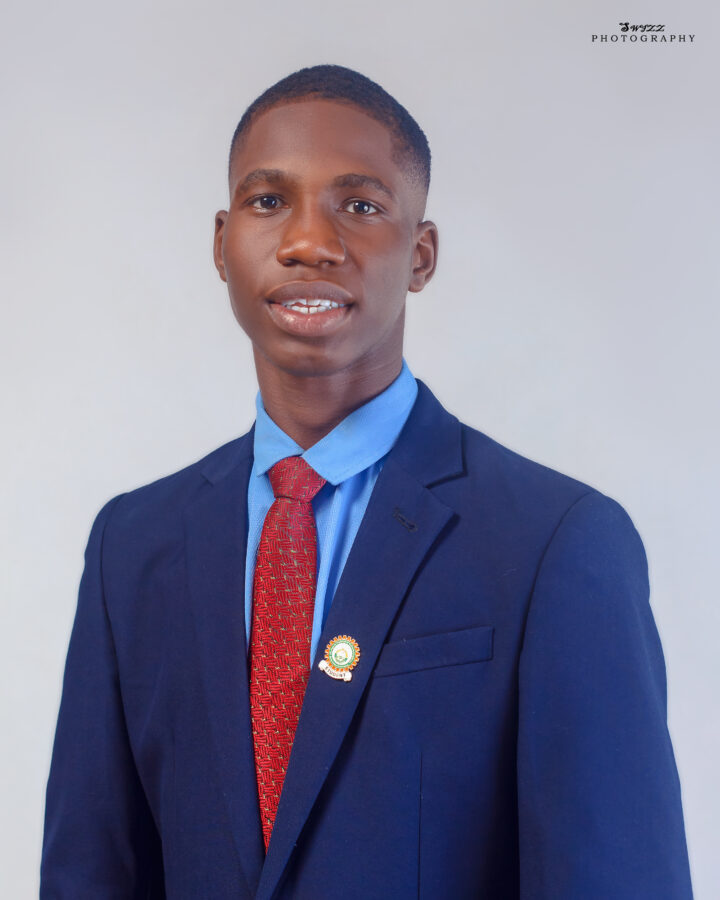
A growing number of young Nigerians are no longer waiting for their government, large corporations, or global organizations to fix local problems. Instead, they are building their own. Among them is Amoo Taiwo Temitayo, a Mechanical Engineering student at Ladoke Akintola University of Technology, Ogbomoso, or LAUTECH, who is working to revolutionize how clinical decisions are made through an emerging platform called MedGuard.
At its core, MedGuard is designed as an AI-driven healthcare decision support system. Its goal is straightforward, if not simple, to help clinicians make faster, more accurate decisions by turning complex and often fragmented patient data into clear, actionable insights. In many healthcare systems, especially in under-resourced environments, this is precisely where the system begins to break down.
Across much of the developing world, patient information is still scattered across paper records, siloed databases, or incomplete digital systems. Clinicians, often overworked and under-supported, must piece together this information under pressure, increasing the risk of delayed diagnoses or missed warning signs. MedGuard seeks to change that by creating a structured, intelligent system that supports, not replaces, medical professionals.
For Taiwo, the inspiration is deeply rooted in observation. He has watched healthcare workers navigate daily challenges with limited tools and overwhelming workloads, while patients bear the consequences of systemic inefficiencies. Exposure to healthcare innovation projects and real-world system gaps sharpened his conviction that technology, when applied thoughtfully, could serve as a powerful support system.
“The goal is not to replace clinicians,” he says, “but to strengthen the systems they operate within.”
Yet the path from idea to implementation has been anything but smooth. As a student founder, Taiwo operates within the constraints familiar to many young innovators, limited access to funding, infrastructure, advanced datasets, and technical mentorship. Building a product as complex as an AI-driven healthcare platform under such conditions demands not just skill, but persistence.
Balancing academic responsibilities with the demands of building a startup is, in itself, a challenge. But for Taiwo, the difficulties have also been personal. At a critical point in his journey, his twin brother, whom he describes as his “backbone and driving force,” was involved in a gas explosion accident and spent two months in the hospital. It was a moment that could have halted progress entirely. Instead, he used it to strengthen his resolve.
There were moments, he admits, when the obstacles felt overwhelming, when progress slowed, and the gap between vision and execution seemed too wide. But he kept moving with the belief that meaningful innovation often begins under strenuous conditions, and that small, consistent efforts can lead to impactful change.
Today, MedGuard remains at the prototype stage, but its significance lies beyond its current form. It represents a broader shift in which young innovators across Africa are tackling complex, system-level problems with limited resources but growing resolve.
Taiwo’s journey reflects a lesson that is becoming increasingly common among this new generation of innovators: you do not need perfect conditions to start. Progress is built through iteration, through trying, failing, learning, and trying again.
That belief is central to why he wants his story told. By sharing his experience with Innov8, he hopes to challenge the assumption that meaningful innovation must come from well-funded labs or established institutions. Instead, he believes that ideas capable of shaping industries and improving lives can emerge from classrooms, hostels, and small collaborative spaces across the continent.
In many ways, MedGuard is still just beginning. But the thinking behind it and the resilience required to build it indicate that a larger shift is unfolding.
This story is part of the Innov8 Student Founders Network, where we spotlight student innovators building solutions that matter.
Are you a student founder? Are you interested in sharing your story to inspire others? Follow the link to send us your story.