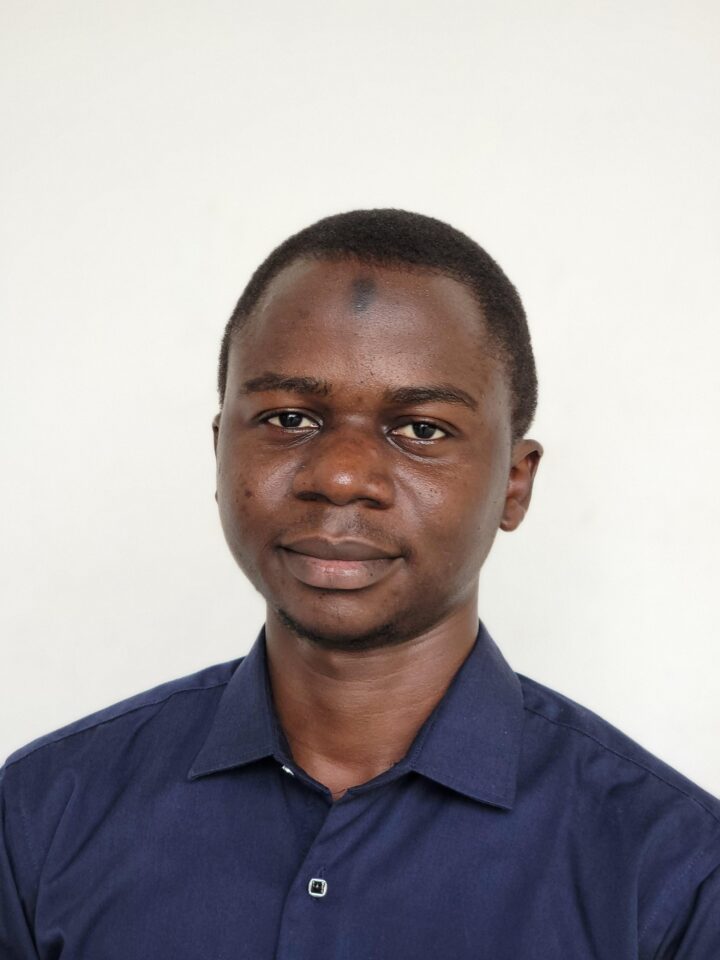
In a country where expired medicines often end up in drains, open dumps, or forgotten corners of homes, one young graduate is asking a simple but urgent question: what happens after the cure?
For Durosinmi Quadri, a recent pharmacy graduate from Obafemi Awolowo University (OAU), that question has grown far beyond an academic exercise. It is now the foundation of PharmaEco, a bold attempt to build a system Nigeria does not yet have.
Building What Doesn’t Exist
Quadri’s budding startup, formerly known as PharmaBin, is centered on a problem most people rarely consider: pharmaceutical waste. Yet beneath that quiet neglect lies a serious threat. Improper disposal of medicines contributes to environmental pollution, antimicrobial resistance, and accidental poisoning, issues that accumulate quietly but dangerously over time.
PharmaEco approaches this challenge from two angles. First, it seeks to establish a medicine take-back system through community pharmacies, creating a safe and structured pathway for returning unused or expired drugs. Second, it explores recycling solutions for pharmaceutical packaging, such as blister packs, a resilient plastic-aluminum composite that resists conventional recycling methods.
The ambition is straightforward, if not simple: to make safe medicine disposal and packaging recovery possible in a system where neither currently exists.
From Research to Reality
The idea began in a classroom. In 2025, as part of his final-year research project, Quadri set out to study pharmaceutical waste management. What he uncovered went beyond theory.
“It wasn’t just about awareness,” he realized. “People often want to do the right thing, but there’s no system to support them.”
That insight marked a turning point for him, and soon his research evolved into a mission to build something practical. But turning insight into a product has proven far more complex.
The Weight of Building Without Proof
PharmaEco remains at the prototype stage, but progress has been hard-won. For Quadri, the greatest challenge has been credibility, the paradox of needing proof to gain support while needing support to produce proof.
Efforts to develop recycling solutions for blister packs have been particularly difficult. Despite extensive outreach to recycling companies and research institutions, access to machines and fabrication support remains out of reach. This absence of local pathways for developing small-scale recycling equipment has created a critical gap between concept and execution.
At times, the process has felt like “hitting a wall over and over.”
Balancing academic demands with the realities of building within a limited infrastructure ecosystem has only intensified the challenge.
The Moment That Could Have Ended It
There was a point when walking away seemed like the more rational choice. Repeated dead ends, unanswered outreach, and the absence of real progress made his vision feel distant, almost unattainable.
But then he had a shift in perspective that changed things. “If the system already existed here,” he says, “I wouldn’t need to build it.”
Thus, the lack of a structured medicine take-back system across Nigeria and much of Africa became not a deterrent but confirmation of his product’s potential. Similarly, the fact that blister pack recycling remains largely concentrated in Europe and North America underscores the scale of the opportunity in Africa.
What once felt like resistance began to look like validation.
Lessons from an Uncertain Path
Quadri’s journey offers a grounded lesson for aspiring student founders: innovation is rarely linear. Unlike academic projects with defined endpoints, real-world problem-solving unfolds slowly, often through trial, error, and sustained uncertainty.
“You don’t need to have everything figured out to start,” he reflects. “But you have to be willing to sit with uncertainty.”
For now, progress takes quieter forms: ongoing research, continued outreach, and the pursuit of funding to initiate pilot testing. There may not yet be a finished product to showcase, but the foundation is steadily being laid.
A Story Still Unfolding
Quadri hopes his story does more than highlight a problem. He wants it to spark collaboration, invite critical insight, and attract the technical and institutional support needed to move from concept to execution.
More importantly, he hopes to challenge prevailing notions of what innovation should look like.
Not every startup begins with funding or polished prototypes. Some begin with unanswered questions, repeated setbacks, and the resolve to keep building anyway.
If PharmaEco succeeds, it will not only introduce a new system for managing pharmaceutical waste in Nigeria, but it will also redefine what is possible when research meets resilience.
Even now, in its earliest stage, it offers something just as valuable: a reminder that meaningful change often begins long before the world is ready to see it.
Are you a student founder? Are you interested in sharing your story to inspire others? Follow the link to send us your story.