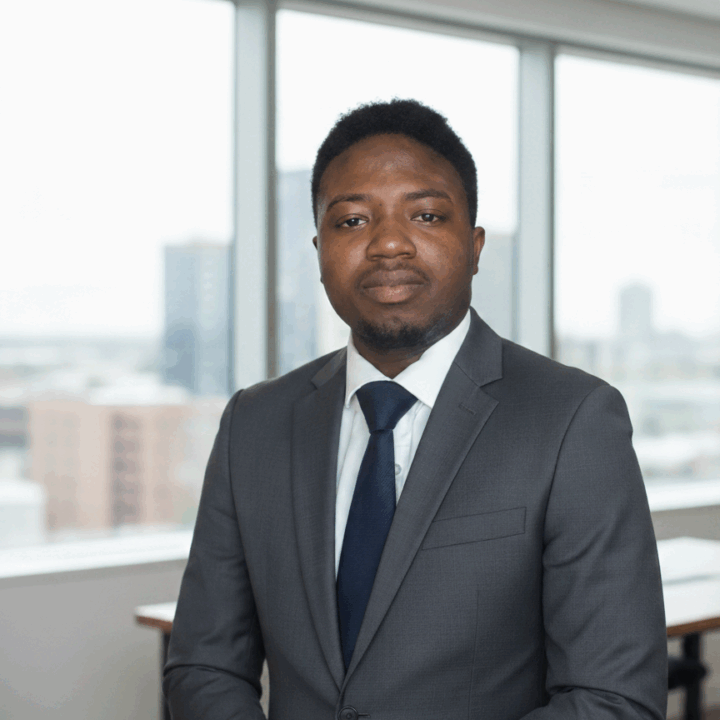
My name is Olusola Somuyiwa, a 600-level medical student at the University of Ibadan, and the founder of VersityEdge.
I’m building what I call Africa’s admission infrastructure, an AI-powered platform that guides students from exam preparation to successful university admission. The goal is simple: remove guesswork and replace it with personalized diagnostics, structured guidance, accountability, and data-driven pathways that help capable students consistently secure competitive admissions at scale.
Because the problem was never intelligence.
It was guidance.
Every year, millions of capable Nigerian students fail to gain university admission. Not because they didn’t try. Not because they lacked ability. But because the system they rely on for preparation is generic, unaccountable, and misaligned with what universities actually assess.
In Nigeria alone, over 2.6 million candidates compete annually for limited, institution-specific slots. Yet students prepare using one-size-fits-all methods. Parents spend heavily on tutorials without visibility into actual readiness. Students make life-shaping decisions using fragmented advice.
The cost?
Repeated exam attempts.
Wasted years.
Financial strain.
Lost human capital at national scale.
That is a systems failure.
Where This Became Personal
VersityEdge started long before it had a name.
Out of 148 students in my secondary school graduating class, I was the only one who secured admission immediately after valedictory service. That contrast stayed with me. Effort wasn’t the issue. Intelligence wasn’t the issue. Something else was missing.
That experience changed how I saw the problem:
Admission success wasn’t random. It was structural and solvable.
In 2022, I built an early machine learning model that helped 242 students estimate their admission chances. The results confirmed my hypothesis. Since then, our approach has helped 843 students secure admission across Nigerian universities.
VersityEdge is the system I wish existed when we were all guessing.
Building VersityEdge while studying Medicine has been the hardest thing I’ve ever done.
I was essentially carrying two full-time responsibilities. There were nights spent coding, designing systems, and solving operational issues, followed by mornings in clinics and lecture halls. I missed classes. I retook tests. There were periods when my academics suffered significantly.
As a first-time founder, I also had to lead people more experienced than me (educators, tutors, developers, marketers) without prior leadership training. Before revenue, I handled product, operations, and growth alone.
Over time, I realized effort alone wasn’t sustainable. I had to build systems, delegate properly, and design a structure. That shift is what now allows both my studies and the company to function sustainably.
The Moment I Almost Stopped
In Q3 2025, after receiving grants from Project I2M (sponsored by RISA and UKAID, implemented by the University of Lagos), expectations were high. We expanded from University of Ibadan to OAU and OOU.
Operationally, the expansion worked.
But our marketing playbook failed in the new campuses. Student acquisition stalled. The OOU program was running at a loss, even though the company remained profitable overall. I was burnt out, sleep-deprived, and mentally stretched.
That was the closest I came to quitting.
What changed things was one realization:
The vision wasn’t the problem. The system was.
I paused, studied the failure, rebuilt our distribution strategy, and treated the setback as a systems problem, not a personal one.
That shift kept VersityEdge alive.
Nothing runs without systems.
If you try to do everything manually, your startup becomes a prison, and your academics will collapse. Growth only becomes sustainable when you break the business into functions (operations, marketing, sales, finance, people) and design simple, repeatable processes for each.
Document those processes so an average person can execute them.
Systems create leverage.
Systems create continuity.
Systems protect your sanity.
If your vision is big, your systems must be bigger than your personal capacity.
I believe in turning ideas into working impact.
Since starting VersityEdge in Q4 2023, I’ve learned hard, practical lessons about building structure, leading teams, balancing school with startups, and turning vision into execution. Many young builders are ambitious but lack access to lived, practical guidance.
If my journey can reduce someone’s false starts, give clarity, or show that disciplined execution can turn dreams into infrastructure, then sharing it is worth it.
Because innovation is not just about ideas.
It’s about building systems that make impact repeatable.



Olusola Somuyiwa
Posted on 11:26 am - January 30, 2026I’m grateful to the Innov8 Team for the opportunity to share my journey. Building VersityEdge as a final-year medical student has been challenging, but reflecting on it reinforced one truth: impact comes from systems, not just ideas. Thank you for amplifying student founders who are building real infrastructure.
Innov8 Hub
Posted on 12:07 pm - January 30, 2026Thank you! You’re proving that real innovation comes from within the community. Building systems, not just ideas, is exactly how we drive change. Keep building!