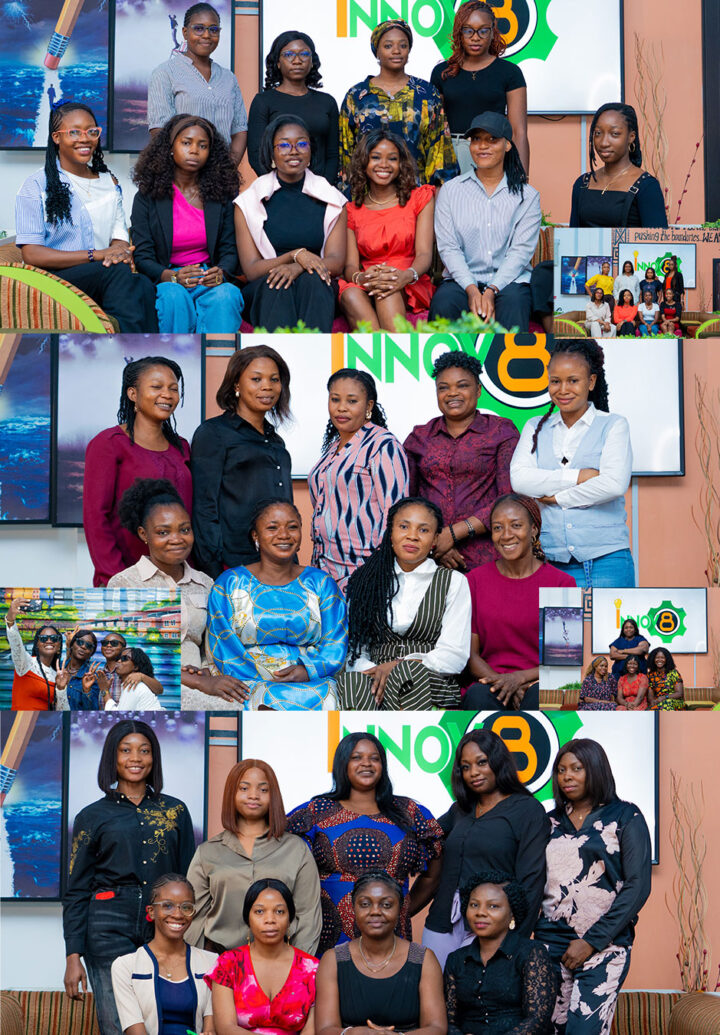
This year’s International Women’s Day is themed Give to Gain. It’s based on the idea that when you support women, it has a multiplier effect on the community by creating more opportunities and growth. So, this is not just a celebration but also a call to action.
Already, women across Nigeria are building ventures that contribute significantly to the nation’s growth. They are designing health solutions, building businesses, and running enterprises.
An example is Odunayo Eweniyi, co-founder and COO of PiggyVest, one of Nigeria’s largest fintechs, which has revolutionized how Nigerians save money. Likewise, Jessica Anuna is the Founder and CEO of Klasha, which is redefining cross-border e-commerce in Africa.
These women and a host of others are not waiting for permission to build but are taking the initiative. Yet, the system they are building within is still heavily male-dominated, and access to opportunities is uneven. If Nigeria is serious about building a globally competitive innovation economy, then women’s inclusion cannot remain a symbolic idea in the ecosystem. It must become central to its architecture.
However, this is not just a Nigerian issue; globally, startups founded solely by women received just 2% of total venture capital funding in 2022, according to data from PitchBook. In Africa, the gap is even wider. According to the 2023 Africa Tech Venture Capital Report by Partech, startups with all-female founding teams received approximately 17% of total VC funding deployed across the continent. Similarly, female-led startups only accounted for 2% of total debt funding within the same period.
This dynamic is not because women lack ideas. According to a 2023 World Economic Forum research, women make up just 28% of all ICT workers worldwide. In Nigeria, women make up only 22% of the workforce in the ICT space, which worsens the gender disparity.
It is also not because women lack entrepreneurial drive; in fact, data shows that Nigerian women dominate in small and medium enterprises. The issue is structural access to high-growth capital. When half of a nation’s talent pool receives a fraction of growth funding, the ecosystem will perform suboptimally.
Access to capital is not the only problem. Innovation thrives where there is structured support: incubators, fabrication labs, research partnerships, prototype facilities, investor pitching programs, and global market access. These are not easily available in emerging markets like Nigeria, except in a few innovation hubs like Innov8, private companies, and government-backed facilities.
There is also evaluation bias regarding female founders. Research from Alison Wood Brooks, Laura Huang, Sarah Wood Kearney, and Fiona E. Murray, published in PNAS, shows that during pitch sessions, investors prefer entrepreneurial ventures pitched by men over women.
This approach to evaluation often results in women receiving significantly less funding, not necessarily because of weaker business models, but because of internal biases. So, although Nigeria’s startup ecosystem raised billions of dollars in venture capital over the past decade, very little of it went to female founders and women-led businesses.
Gender Inclusion is not just an ideal to aim toward; it has a real impact on businesses and communities. Data from McKinsey & Company shows that companies in the top quartile for gender diversity globally are 25% more likely to outperform on profitability (Diversity Wins Report, 2020). This means that diversity correlates with performance because it improves decision-making, risk assessment, and market insight.
However, there cannot be meaningful diversity without intentional infrastructure, but because ecosystems are still being built in emerging markets like Nigeria. There is an opportunity to design inclusion from the beginning rather than introducing it later. From our assessment at Innov8 Hub for meaningful change to happen, several levers matter most:
1. Early Pipeline Development: Schools, governmental bodies, and private organizations must put a conscious effort to encourage female students to experiment, prototype, and commercialize ideas while still in school, thereby building their confidence before the funding conversation begins.
2. Infrastructure Access: Women innovators should be given access to fabrication labs, technical mentorship, research advisory, and structured incubation, which will improve their capability.
3. Targeted Mentorship and Community: Having women-focused founder circles, mentorship programs, and structured peer networks will help female founders build resilience, improve their network, and establish a support system.
4. Spotlighting Female Innovators: Media platforms, founder spotlights, and demo days must intentionally make provisions for female participants across sectors from health tech to agritech, climate to creative enterprise.
At Innov8 Hub, we are already putting structures in place to support female participation by:
- Ensuring female innovators have equal access to our labs, experts, and prototyping facilities.
- We provide equal opportunities for female-led startups to showcase their products at our programs, such as iFAIR, where they can meet potential investors.
- We ensure that every team that comes in for Tetfund Alliance for Innovative Research (TETFAIR) has at least one female in the team.
- We deliberately spotlight high-potential female student founders across Nigerian campuses who are building innovative solutions in different sectors. Through our blog and the Innov8 Student Founders Network, we share their stories, amplify their work, and connect them to a growing community of innovators, mentors, and opportunities.
Nigeria and Africa’s future will be shaped by innovation. The real question is whether that innovation economy will truly reflect the full diversity of its people.
This Women’s Day, the commitment must go beyond praise and symbolic gestures. It must translate into building systems that enable women not just to participate but also to lead in Nigeria’s innovation ecosystem.