

Innovation does not exist in a vacuum; every piece of technological advancement or research is aimed at solving a problem that is affecting a group of people. It is the application of ideas to solve real problems in specific environments and localities. As a result, the local context of a region, which includes cultural, economic, and societal factors, should be considered when developing solutions for that area.
The local context of an environment determines how a group of people live, their needs, their values, and how they make decisions. Thus, one cannot attempt to proffer solutions to issues affecting a group of people without first understanding them; doing this will enable researchers to create innovations that are relevant to local issues and increase their chances of success. The fact is that innovation that ignores local context typically does not scale; it falls flat.
For example, when OPay entered the Nigerian market, it didn’t design its services around a fully digital, card-based banking system like one that is available in the US or Europe. Instead, it responded to Nigerian realities: a large unbanked population, heavy dependence on cash transactions, frequent bank network failures, and a significant informal economy. To fit into this existing reality, OPay built an easy-to-use mobile app that provided seamless transfers, notified users of network outages, provided USSD for those without smartphones, and recruited thousands of people into its payment operating service (aka POS), which allows Nigerians to deposit and withdraw cash physically. By aligning its model with how Nigerians already move money and improving on it, OPay achieved rapid adoption with the general public.
Conversely, research or products designed without factoring the local context can fail to meet the needs of the populace. For example, youth employment programs in predominantly Muslim communities might fail to attract participants, particularly women, if they ignore cultural norms regarding the intermingling of genders in enclosed and sometimes public spaces.
Further, the failure to factor in local context while researching often results in wasted resources on unusable products, which reduces the chances of future funding opportunities. It can also deepen distrust between the local communities and institutions who fail to fulfill promises or worsen their situation.

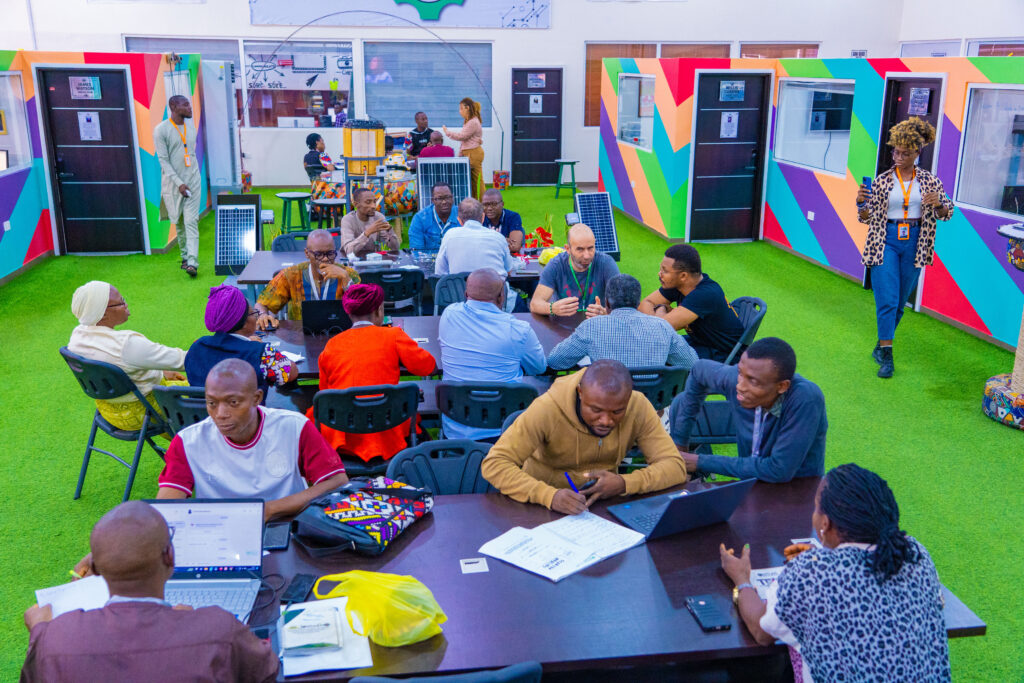

To prevent this, researchers have to factor in the local context at every step of their process by incorporating mechanisms such as stakeholder engagement, community assessments, and culturally responsive training into their systems:
Community Assessments
Effective innovation begins with listening. Desk research can provide demographic data, economic indicators, and sector reports, but it rarely captures lived experience. Community assessments require physically entering communities, speaking with residents, observing daily routines, and mapping both assets and gaps alongside those who live there. This approach recognizes that communities are not blank slates defined only by their needs; they are ecosystems rich with informal networks, skills, cultural capital, and indigenous problem-solving methods. By walking to markets, visiting schools, engaging with local artisans, sitting with local associations and innovators, these help identify constraints that spreadsheets cannot reveal, such as trust dynamics, informal power structures, seasonal income patterns, or social stigmas that shape adoption. Mapping assets with residents rather than for them shifts the process from extraction to collaboration. It transforms beneficiaries into partners and ensures that solutions are grounded in reality rather than assumptions.
Stakeholder Consultations
Sustainable innovation requires legitimacy. Designs imposed without consultation often face resistance, underutilization, or quiet rejection. Meaningful stakeholder consultation involves co-creating solutions with community leaders, youth representatives, women’s groups, informal sector actors, and vulnerable populations. Youth voices often identify emerging behavioral shifts before institutions do. Women frequently understand household economic flows more precisely than formal data sources reflect. Community leaders provide insight into historical tensions, informal governance, and trust networks. When stakeholders contribute to shaping a solution, they develop ownership over it. Buy-in becomes organic rather than forced. More importantly, co-creation protects dignity. It avoids the paternalistic trap of “designing for” communities and instead affirms the agency of those the innovation intends to serve.
Culturally Responsive Training
Capacity building fails when it feels foreign. Workshops delivered in unfamiliar terminology, framed around irrelevant foreign case studies, or detached from local customs often alienate participants. Culturally responsive training adapts language, metaphors, and examples to local realities. This may mean delivering sessions in local languages, referencing regional market practices, or drawing lessons from Nigerian enterprises rather than distant multinational corporations. Learning is most effective when participants see themselves reflected in the material. Cultural responsiveness also respects social norms from communication styles to decision-making hierarchies, ensuring that training environments feel psychologically safe and contextually appropriate. By embedding local narratives into curriculum design, capacity-building initiatives move from abstract theory to practical relevance.
Implementing these strategies shifts the question from “What solution works elsewhere?” to “What solution works here, for these people, under these conditions?”
Essentially, innovation is not about copying what works elsewhere or “building like Silicon Valley.” It is about translating ideas into forms that make sense and help the host community.