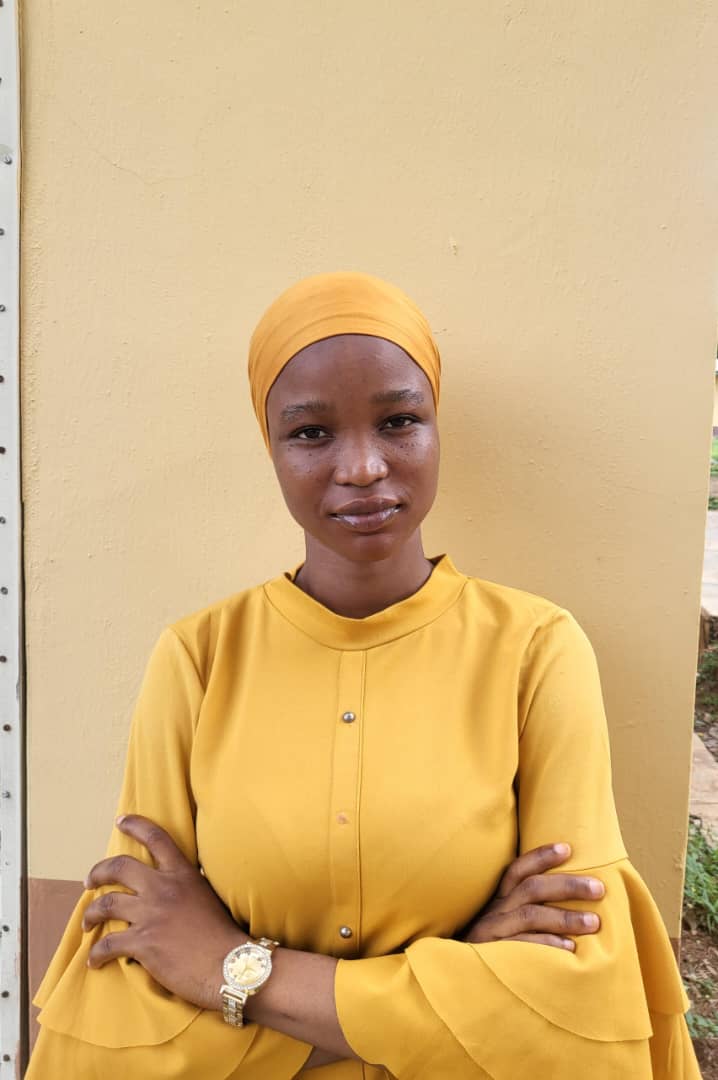
Aminah Oyindamola Nasirudeen is a veterinary medicine student at the University of Ilorin working on a problem she first encountered much closer to home: how to raise livestock without guesswork.
Aminah is the founder of LivestraQ, an early-stage agritech platform designed to help farmers track their animals, access veterinary guidance, and connect with buyers. It is a tool shaped less by abstract market research than by lived experience.
“I grew up watching my mom farm,” she said. “A lot of things were done without proper tracking or access to information.”
That gap, between the demands of livestock farming and the limited tools available to manage it, sits at the center of her work.
LivestraQ, currently at the prototype stage, aims to function as a digital companion for farmers. The platform is being built to allow users to monitor livestock in real time, keep records, and receive practical guidance on animal care. It also includes plans for a network of veterinarians who can advise farmers on disease prevention and treatment, services that are often difficult to access, especially for small-scale operators.
But Aminah’s ambitions extend beyond animal health. She wants the platform to address the business inefficiencies that plague livestock farming as well, particularly the challenge of finding reliable buyers. By integrating a marketplace component, LivestraQ could help farmers move their products more efficiently and, in turn, improve their income stability.
Her interest in agritech sharpened during a training program in urban agricultural development, where she began to see how digital tools could be applied to long-standing agricultural problems. What followed was not a fully formed startup but a gradual process of learning about technology, about product design, and about the realities of building something from scratch as a student.
However, that process has been uneven. “The hardest part has been turning the idea into something real,” she said, pointing to the dual challenge of gaining technical knowledge and securing funding.
Like many student founders, she is navigating both simultaneously, building as she learns. Still, she resists framing the journey in terms of setbacks. She says she has not seriously considered abandoning the project, choosing instead to focus on incremental progress. Along the way, she has arrived at a conclusion that runs counter to a common narrative in startup culture: funding, while important, is not the starting point.
“Building a platform isn’t just about money,” she said. “It’s about having the right knowledge, structure, and understanding of what you’re trying to solve.”
For now, LivestraQ remains a work in progress. But Aminah is less concerned with speed than with direction, refining the idea, expanding her skill set, and seeking out collaborators who can help move the project forward.
She hopes that sharing her story will connect her with others working at the intersection of agriculture and technology, and perhaps encourage more students to see innovation not as something distant, but as something they can participate in.
Are you a student founder? Are you interested in sharing your story to inspire others? Follow the link to send us your story.