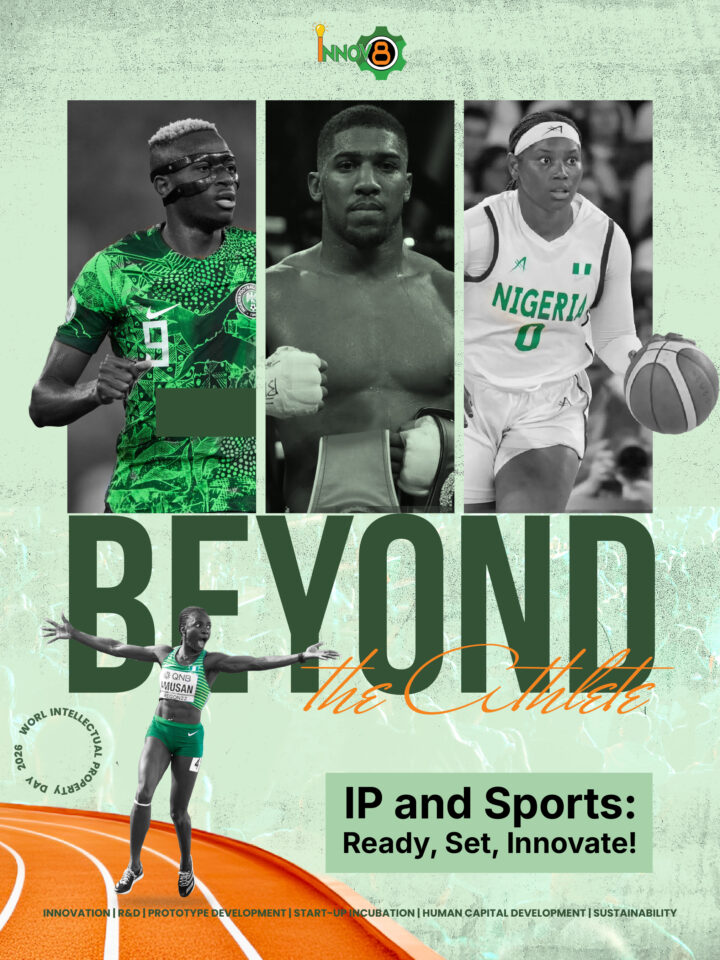
As the world marks World Intellectual Property Day 2026 under the theme “IP and Sports: Ready, Set, Innovate.” Few countries embody that theme more vividly than Nigeria, a nation whose athletes have become some of its most recognizable global ambassadors and pillars of its soft power. However, in the midst of this celebration is also a sobering reality that many Nigerian athletes are left unprotected from IP theft.
We live in an era where a viral celebration on social media, a catchphrase, or signature move can be worth more than a season’s salary, yet many of Nigeria’s finest athletes, home and abroad, are left to navigate these murky waters essentially “naked,” unprotected by the legal frameworks designed to ensure they profit from their own talents.
For decades, the Nigerian sporting narrative has been centered on the underdogs, the one raw, unrefined talent overcoming systemic neglect to become a star. Nigeria has produced elite athletic excellence. Names like Hakeem Olajuwon, Tobi Amusan, Victor Osimhen, Anthony Joshua, and Asisat Oshoala have carried the nation’s flag into the world’s biggest arenas. But as the Nigerian sports industry matures and becomes more recognized globally, “talent” is no longer enough. We are witnessing a shift where an athlete’s intellectual property (IP), i.e., their name, their image, and their digital likeness, is an asset.
Yet, walk through the bustling markets of Mushin or Onitsha, and you will see jerseys bearing the names of local stars sold by the thousands. Not a single Naira in royalties returns to the players. This isn’t merely a “black market” quirk; it is a systemic failure to treat the athlete as an IP owner. In the eyes of local businesses and even the general public, Nigerian athletes are seen as a public utility, a resource to be tapped until the well runs dry, and then move on to the next.
That is where intellectual property becomes transformative. Trademarks protect names, logos, and slogans. Copyright safeguards documentaries. media content, and digital productions. Patents can protect sports technology, from recovery devices to wearable performance tools. Industrial designs can cover footwear, kits, and accessories. Trade secrets can preserve proprietary coaching methods or nutrition systems.
Too often, African athletes generate global attention while others capture the long-term value. Image rights are managed elsewhere. Licensing deals are negotiated abroad. Merchandise ecosystems are built in foreign markets. Nigeria celebrates the athlete but too rarely owns the business built around the athlete.
However, with a robust sports intellectual property ecosystem, the wider economy would benefit as well. Sports intellectual property creates opportunities for lawyers, designers, marketers, filmmakers, software developers, physiotherapists, data analysts, manufacturers, and investors. It turns one athlete’s success into an ecosystem of jobs and enterprise for their community.
The Nigerian government has made efforts to address the scourge of intellectual property theft, and the 2026 implementation of the National Intellectual Property Policy and Strategy (NIPPS) has finally given law enforcement more “teeth” to punish offenders.
This and other laws governing the protection of intellectual property in Nigeria, such as the Trademarks Act, Trademark Regulations, 1990, Merchandise Marks Act Cap M10 LFN 2004, and Trademark Malpractices (Miscellaneous Offenses) Act, Cap T12 LFN 2004, are all designed to ensure that a creator’s work is not exploited. However, legislation without enforcement is dead on arrival.
The 2026 theme, Ready, Set, Innovate, suggests that “innovation” in sports isn’t limited to aerodynamic fabrics but also the individual brands. It highlights a need for athletes to realize that, without a registered trademark, they are relying on the common-law principle of “passing off.” This doctrine allows an athlete to sue if a company uses their likeness to trick the public into thinking there is an official partnership. But, to win a passing-off case, an athlete must prove three things:
- They have an established reputation (Goodwill).
- The company’s actions misled the public.
- This confusion caused the athlete financial or reputational harm.
So while useful, passing off is a reactive and difficult legal route because proving these elements in court is often more expensive and time-consuming than simply registering a trademark at the start of a career.
If Nigeria is to become a global sporting powerhouse, then policymakers must develop a strategy that doesn’t just focus on the pitch but also on the intellectual property and future of Nigerian athletes. We must also educate the grassroots footballer, basketballer, and boxer that a contract isn’t just about a weekly wage; it’s about who owns his shadow.
Because in 2026, the greatest tragedy isn’t losing a match in the 90th minute; it’s winning the world over and realizing you don’t own the rights to your own victory.
So Nigeria, get ready, set, innovate.