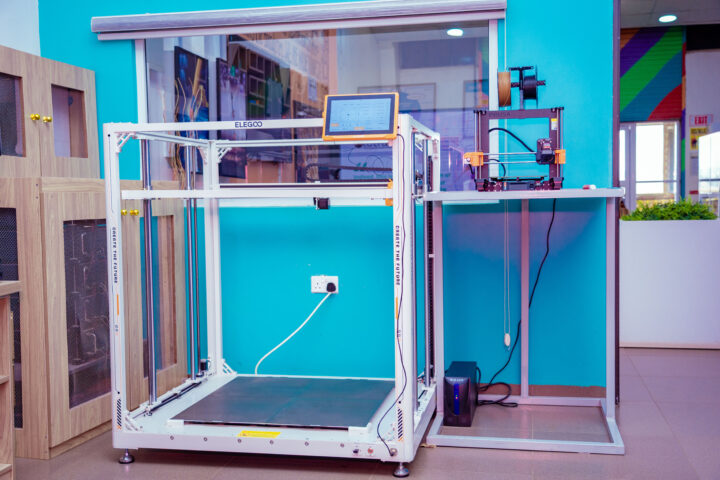
Few technologies in recent years have collapsed the distance between idea and execution as dramatically as 3D printing. Also known as additive manufacturing, it enables the creation of physical objects directly from digital designs layer by layer, with minimal waste and precision.
By enabling the creation of physical objects directly from digital designs, layer by layer, 3D printing has collapsed the distance between a concept and its physical execution. What began as a niche tool for rapid prototyping has evolved into a cross-industry disruptor, reshaping everything from aerospace engineering to personalized healthcare.
For Nigeria, this global shift presents a rare, strategic opening. As the country urgently seeks to diversify its economy beyond oil and build a resilient industrial base, 3D printing offers a pathway to bypass the heavy, capital-intensive constraints of traditional manufacturing and participate directly in the next era of global production.
The traditional manufacturing model relies on producing goods in bulk and shipping them globally. Additive manufacturing introduces a radical alternative: decentralized, on-demand production. Instead of managing vast inventories, companies can now print components closer to the point of use.
This shift from mass production to mass customization carries profound advantages for industries, including:
- Hyper-fast iteration: Prototypes can move from initial design to physical testing in a matter of days, not months.
- Lean inventory: Products and parts are manufactured only when a specific demand arises.
- Unbound design: Complex geometries that were once impossibly expensive or physically impossible to cast or mill can now be printed with ease.
Currently, this disruption is most visible in sectors where speed, precision, and customization are non-negotiable. In healthcare, the technology is democratizing access to custom prosthetics, implants, and surgical tools at a fraction of traditional costs. In heavy industry and energy, crucial sectors for Nigeria, companies are circumventing global supply chain bottlenecks by printing critical spare parts on demand. Meanwhile, for entrepreneurs and SMEs, the technology has drastically lowered the barrier to entry, allowing founders to design, test, and manufacture without the massive capital outlays previously required to launch a hardware product.
At its core, 3D printing redistributes manufacturing power, placing it directly into the hands of smaller, more agile innovators.
However, Nigeria’s 3D printing ecosystem is still in its infancy, but that may actually be its greatest asset. Because it is unburdened by deeply entrenched, legacy manufacturing systems, the country has the flexibility to adopt highly efficient, future-facing production models from the ground up.
Early signs of adoption are already taking root. Innovators are experimenting with affordable healthcare solutions like localized prosthetic production, STEM education hubs are integrating the technology, and small businesses are exploring localized manufacturing. Crucially, there is a growing push toward sustainability, with pilot programs experimenting with turning recycled plastics and electronic waste into printing filament.
Yet, the promise of this technology is colliding with familiar, systemic hurdles:
- Capital barriers: The upfront costs of industrial-grade equipment and specialized materials remain high.
- The skills gap: There is a pronounced shortage of technical expertise in additive design and machine operation.
- Infrastructure deficits: Unreliable electricity and inconsistent digital connectivity threaten the uninterrupted operation of advanced machinery.
- Institutional awareness: Policymakers and legacy industry leaders remain largely unaware of the technology’s scalable potential.
Unlocking the economic potential of 3D printing in Nigeria will require deliberate, coordinated action between the government, the private sector, and international partners.
To capitalize on this shift, the country must invest aggressively in talent by embedding additive manufacturing into academic curricula and technical training. It must build fabrication infrastructure, scaling equipped labs across major cities to give startups access to the tools they need. The government should also support hardware innovation through tax relief, grants, and targeted funding for manufacturing startups, while strategically integrating the technology into critical sectors like healthcare, construction, and oil to reduce import dependency.
To this end, Innov8 Hub is trying to bridge these gaps. Through a recent partnership, the Czech Republic’s Ministry of Foreign Affairs, working through its embassy in Nigeria and Innov8 Hub, has plans to establish a dedicated STEAM and 3D printing technology center that will be powered by machinery from Prusa Research, a leading Czech manufacturer.
The initiative goes beyond merely dropping equipment into a room. It focuses heavily on capacity building: equipping students, educators, and local founders with the practical engineering and design skills required to actually create. This model tackles Nigeria’s most significant barrier to entry, limited access to both knowledge and infrastructure, by providing tools, training, and a collaborative community.
Furthermore, it signals a vital shift in mindset. The global economy is rapidly evolving, and Nigeria is at a crossroads: remain a perpetual consumer of imported goods or leverage technologies like 3D printing to become a manufacturing powerhouse. Initiatives like the Innov8 Hub partnership prove that when access meets intentional education, a new industrial base is possible.